If you are considering a horizontal refrigerator for a kitchen, garage, or commercial space, noise is one of the first practical questions that comes up. Unlike upright models, horizontal refrigerators place the compressor and condenser inside a low, wide cabinet, and that layout changes both how loud the unit sounds and how that sound travels through a room. Most horizontal refrigerators run somewhere between 35 and 50 decibels, but the gap between a well-built unit and a budget one becomes obvious within minutes of switching it on. This guide explains what noise levels are realistic, what causes excessive noise, and how to choose a model that stays quiet for years.
Manufacturers rarely print decibel ratings on the spec sheet, so buyers usually rely on guesswork or user reviews. In practice, horizontal refrigerators measured with a sound meter at roughly one meter distance tend to fall into a fairly predictable band:
Treat these as realistic expectations rather than guarantees. Ambient temperature, load level, and how well the cabinet is leveled all shift the final number by several decibels.
Decibels are logarithmic, which means the numbers do not scale the way people assume. A 10 dB increase is perceived as roughly twice as loud, not 10 percent louder. That is why the difference between a 38 dB unit and a 46 dB unit feels dramatic in a quiet kitchen, even though the numbers look close on paper.
Equally important is duty cycle. A horizontal refrigerator that runs at 42 dB for eight minutes per hour can be far less disruptive than a 36 dB unit that never switches off. When comparing models, consider both peak sound and how often the compressor cycles.
The low, wide cabinet is not just a storage decision — it has acoustic advantages. The compressor sits lower in the chassis, often on rubber vibration dampers, and the heavy insulated lid absorbs more sound than a thin upright door. Many horizontal models also use static cooling rather than a forced-air fan, which removes one of the most persistent noise sources in modern refrigerators.
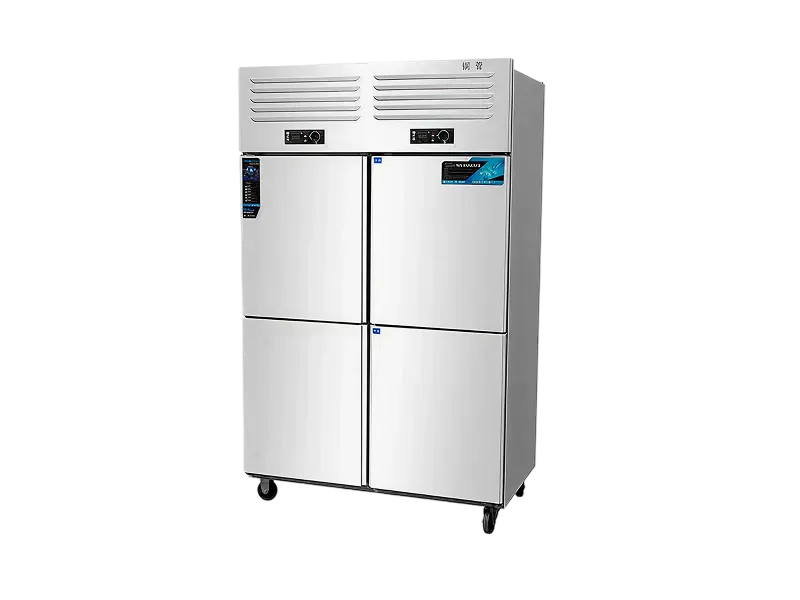
If quiet operation is a priority, the cabinet orientation matters more than most buyers expect. Horizontal refrigerators hold several structural advantages over comparable upright models:
Upright refrigerators still win on accessibility and footprint, and a high-quality upright with an inverter compressor can match a budget horizontal unit. The comparison is not absolute — it is a general pattern driven by mechanical design.
When a horizontal refrigerator becomes noticeably louder than it used to be, the cause is usually mechanical or environmental rather than a manufacturing defect. The most common culprits include:

Not every noise indicates a problem. Use the table below as a quick diagnostic reference before calling a technician.
| Sound | Normal? | What It Usually Indicates |
|---|---|---|
| Low, steady hum | Yes | Compressor operating as designed |
| Gurgling or bubbling | Yes | Refrigerant moving through the lines |
| Soft click | Yes | Thermostat or relay cycling on and off |
| Rattling or buzzing | No | Loose panel, pipe contact, or debris beneath the unit |
| Loud knock at startup | No | Compressor mount failure or internal wear |
| Continuous high-pitched running | No | Gasket leak, low refrigerant charge, or overheating |
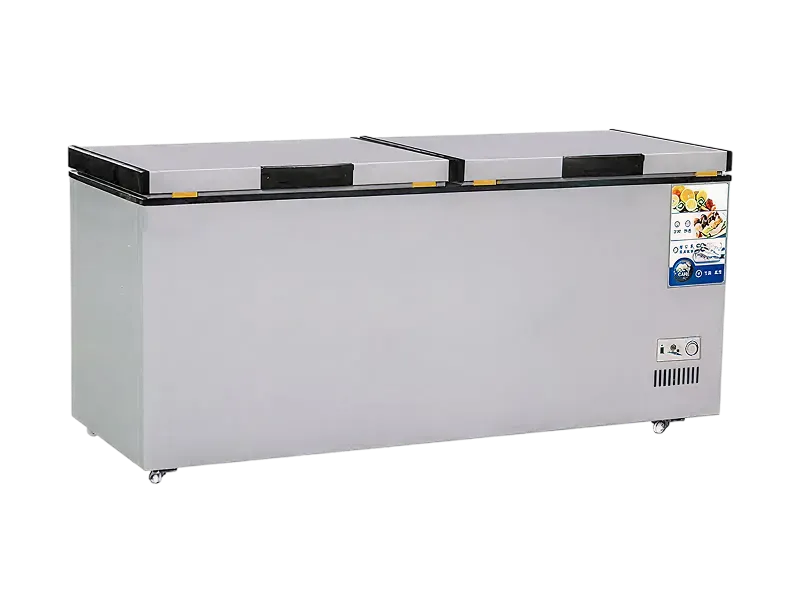
Because decibel ratings are rarely published, buyers need to evaluate design rather than marketing claims. The following features are the strongest predictors of low operating noise:
When sourcing units in volume, ask suppliers directly about compressor type, insulation thickness, and whether sound output has been tested at one meter. TZY Kitchenware designs and supplies horizontal refrigeration units built around low-vibration compressor mounting and densely insulated cabinets — the two factors that most directly determine real-world noise levels. That focus matters in hospitality and retail settings, where a refrigerator that hums through a dining area or a quiet shop floor quickly becomes a customer complaint.
No. Around 40 dB is a normal, comfortable level for a residential refrigerator and sits close to the sound of a quiet library. It becomes noticeable mainly in a silent room at night.
The most frequent causes are an uneven floor, items rattling inside the cabinet, dirty condenser coils, or a failing lid gasket. Mechanical wear in the compressor mount is less common but should be checked if the noise is a sharp knock.
Generally yes, mainly because many horizontal models use static cooling without a circulating fan, and their low compressor position reduces vibration transfer. A premium upright with an inverter compressor can still outperform a budget horizontal unit.
It is possible, but choose a model rated below 40 dB, place it on a vibration-damping mat, and keep it away from the bed wall. Refrigerant gurgling is normal and may still be audible in a silent room.
A horizontal refrigerator should produce a low, steady hum in the 35 to 45 dB range, cycle on and off at reasonable intervals, and stay free of rattles or knocks. If a unit exceeds that pattern, the problem is usually leveling, airflow, or a worn component rather than the design itself. Focus on compressor type, insulation, and mounting quality when you buy, and you will rarely need to think about noise again. For buyers sourcing in volume, working with an experienced supplier such as TZY Kitchenware makes it easier to verify those specifications before committing to a full order.
Address: China · Shandong Province · Binzhou Detailed Address
Email: tzy@tzykitchenware.com
Phone: +8618754395173

Kitchen equipment
High-performance quality kitchen equipment supplier
Innovative and durable kitchen solutions for chefs and foodservice businesses


Call / Email
+8618754395173
tzy@tzykitchenware.com
Visit Our Office
China · Shandong Province · Binzhou Detailed Address
