A first home rarely comes with a fully equipped kitchen. Between the down payment, moving costs, and the endless small purchases that follow, the appliance budget is usually the first thing that gets squeezed. That is why so many new homeowners end up searching for an affordable horizontal refrigerator instead of a tall, feature-heavy upright model. A horizontal unit — often called a chest or top-opening refrigerator — offers a straightforward trade-off: more usable storage per dollar, simpler mechanics, and lower running costs, in exchange for a footprint that spreads sideways rather than upward. This guide walks through what to check before you buy, so your first refrigerator lasts through your first decade of homeownership.
The term describes orientation, not a single product category. A horizontal refrigerator places the compressor and cooling coils so the cabinet stretches along the floor, with a lid or door that opens from the top or the front, depending on the design. In practice, most budget-friendly options in this shape are chest-style units, while some side-by-side and under-counter models also fall into the horizontal family because of how they are laid out in a kitchen.
Cold air is heavy. In an upright refrigerator, every time you open the door, that cold air spills out and the compressor has to work to replace it. In a top-opening horizontal cabinet, the cold air simply settles and stays put, because it has nowhere to fall. This is the single biggest reason horizontal units tend to hold temperature more steadily and consume less electricity over a typical week of use.
There is a practical side to this too. Because the cold mass stays in the cabinet, food recovers temperature faster after a power interruption, which matters in areas with an unreliable grid or during storm season.
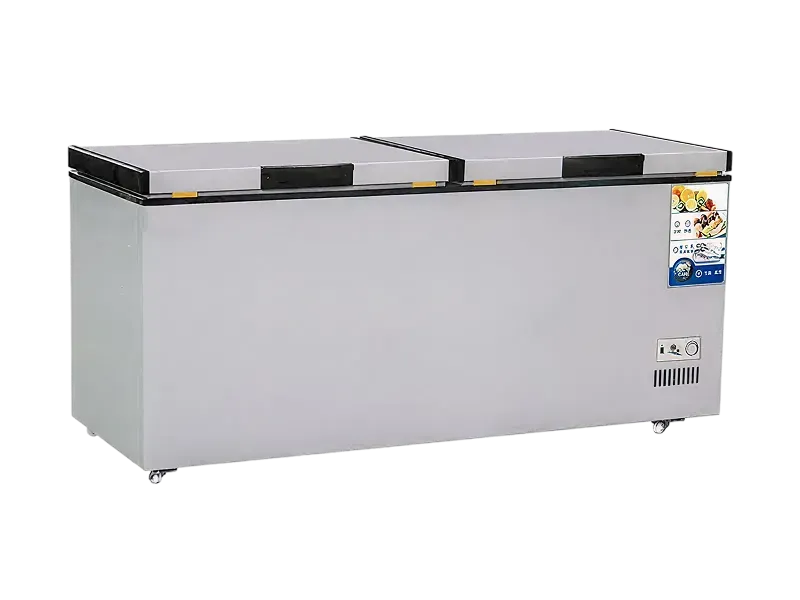
Most first-home buyers overestimate how much capacity they need and underestimate how much floor space they have. Measure twice: once for the footprint, and once for the clearance needed to fully open the lid or door. A lid that cannot swing past 90 degrees turns a convenient appliance into a daily annoyance.
Compact horizontal units in the 3 to 5 cubic foot range suit one or two people and fit neatly against a kitchen wall or in a hallway nook. Mid-size models around 5 to 9 cubic feet cover a small household that cooks at home regularly and buys in bulk. Larger horizontal cabinets beyond that are usually bought for freezing capacity rather than everyday refrigeration, and they need a dedicated corner with ventilation on all sides.
Whatever size you choose, leave at least a few centimeters of air gap around the cabinet. Horizontal refrigerators release heat through their side walls and base, and a unit pushed flush against drywall will run longer and cost more to operate.
Purchase price is only the first number. Over five years, energy use and repair history usually decide whether a cheap refrigerator was actually affordable. Manufacturers such as TZY Kitchenware focus on this calculation by keeping the mechanical design simple: fewer electronic components, fewer failure points, and easier access for servicing.
One more cost that buyers forget: door or lid seals. A worn gasket can add a noticeable amount to a monthly electricity bill, so check that replacements are easy to source before you commit.
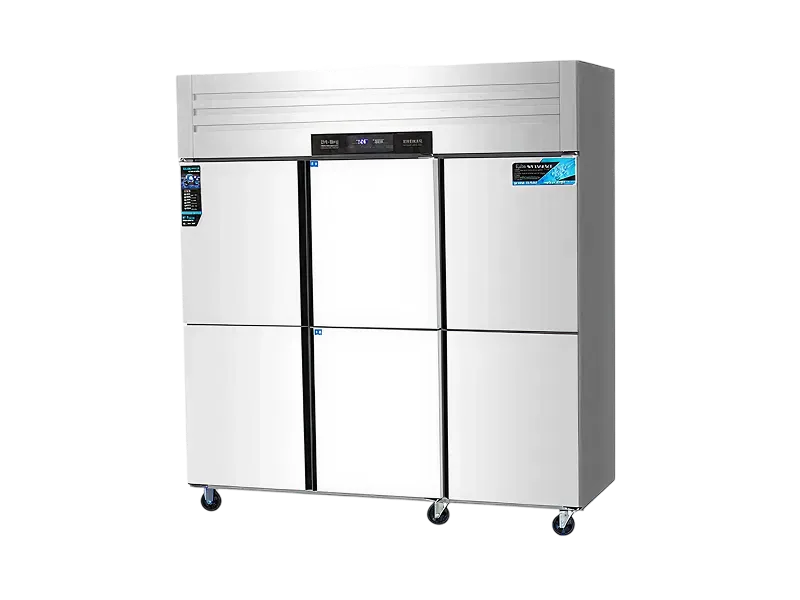
Budget horizontal refrigerators are not stripped-down versions of premium models; they are designed around a different set of priorities. Knowing which extras genuinely improve daily use keeps you from paying for decoration.
Suppliers such as TZY Kitchenware typically publish dimensional drawings and load specifications, which makes this checklist faster to work through than guessing from photos.
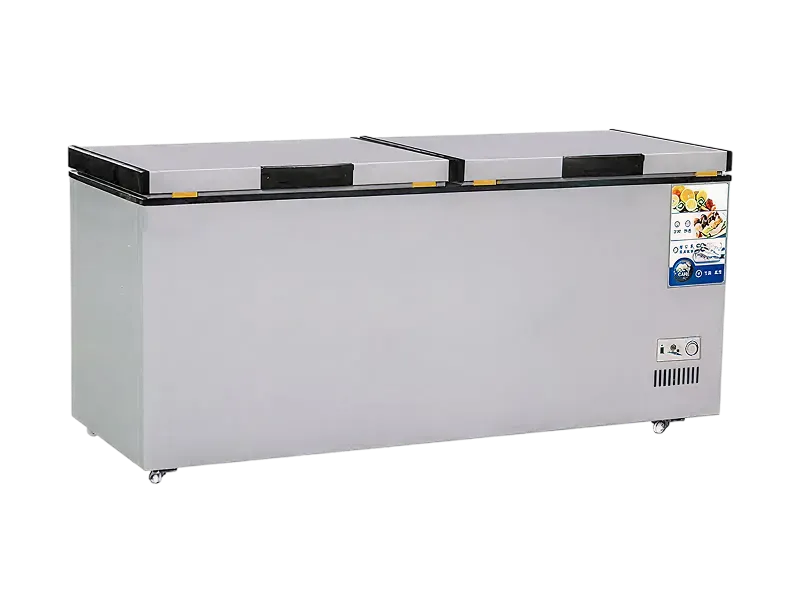
Generally yes, for the same internal volume, because cold air does not escape when the lid opens. The gap widens in humid climates and in homes where the refrigerator is opened many times a day.
It can, especially in small homes, but the layout takes adjustment. Bending to reach items at the bottom of a deep chest becomes tiring, so baskets and an organized stacking routine matter more than they do in an upright unit.
Anywhere with stable room temperature, a level floor, and airflow around the cabinet. Avoid direct sunlight, close proximity to ovens, and unheated garages in freezing climates unless the model is explicitly rated for it.
With simple mechanics and regular gasket maintenance, a decade of service is a reasonable expectation. Keeping the coils clean and the seal soft does more for lifespan than any premium feature.
An affordable horizontal refrigerator is rarely the most glamorous appliance in a first home, but it is often the most sensible. Focus on capacity that matches how you actually shop, insulation and seals that keep running costs down, and a design simple enough to repair locally. Get those three right, and the money you save on the purchase and on monthly electricity goes toward the parts of a first home that matter more than a digital display.
Address: China · Shandong Province · Binzhou Detailed Address
Email: tzy@tzykitchenware.com
Phone: +8618754395173

Kitchen equipment
High-performance quality kitchen equipment supplier
Innovative and durable kitchen solutions for chefs and foodservice businesses


Call / Email
+8618754395173
tzy@tzykitchenware.com
Visit Our Office
China · Shandong Province · Binzhou Detailed Address


