Reaching into a deep horizontal refrigerator to retrieve one item often means lifting out three others first. That inefficiency is exactly what a horizontal refrigerator with drawers is designed to eliminate. By converting a single deep cavity into a series of pull-out compartments, this configuration keeps contents visible, organized, and accessible without excessive bending or reshuffling. For kitchens where speed and ergonomics matter — commercial prep lines, small cafés, residential islands, and garage or bar setups — the drawer format changes how refrigeration is used day to day. This guide explains how these units are built, where they outperform conventional designs, and which specifications deserve close attention before you commit to a purchase.
The category combines two design decisions: a low, wide cabinet orientation and a compartment-based interior. Understanding each separately makes it easier to judge whether a specific model fits your space and workflow.
A horizontal unit sits lower and wider than a standard upright refrigerator. The low profile keeps the top surface at counter height in many installations, which allows the appliance to double as a work surface or to slide beneath an existing counter. Because the cabinet is wider rather than taller, it does not compete for vertical wall space — a meaningful advantage in rooms with windows, shelving, or overhead cabinetry.
Instead of one deep interior box, the cabinet is divided into two, three, or sometimes four pull-out drawers. Each drawer functions as a self-contained storage zone with its own front panel and, in better designs, its own temperature setting. This segmentation is the core functional difference: contents are grouped by category rather than stacked by whatever fits.
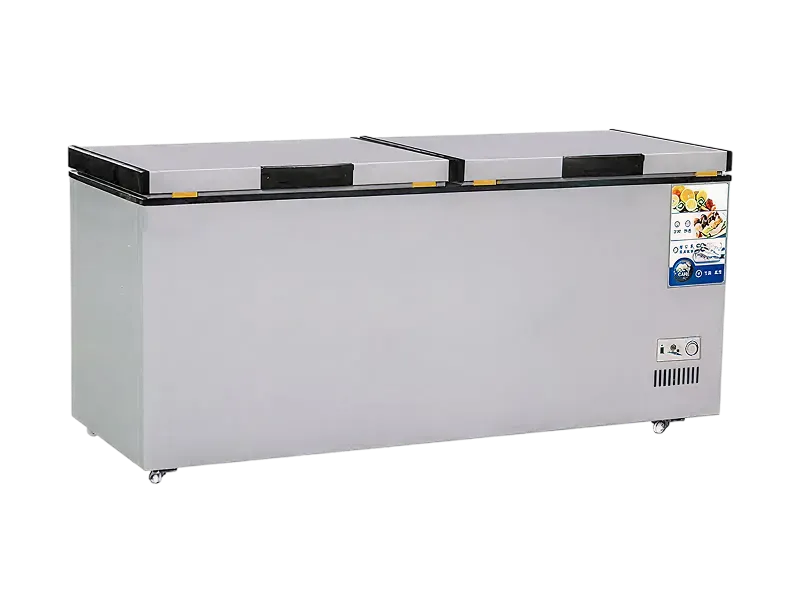
Accessibility is not a cosmetic preference. In a busy environment, the time spent searching for an item compounds across every shift. Drawer systems address this at the physical level.
The practical result is a shorter path between wanting an item and holding it. In food service, that translates into faster ticket times; at home, it means fewer open-door moments and less wasted energy.
Neither format is universally superior — the right choice depends on footprint, volume, and how often the unit is opened. The comparison below reflects the trade-offs that matter most in real installations.
| Consideration | Horizontal Drawer Unit | Upright Swing-Door Unit |
|---|---|---|
| Access pattern | Pull-out, top-down visibility | Shelf-based, requires reaching |
| Vertical space used | Low; fits under counters | High; needs full-height clearance |
| Cold-air retention | Better; only the opened drawer is exposed | Lower; entire cavity exposed |
| Bulk storage | Moderate; drawer depth limits tall items | High; tall items and stacked trays fit easily |
| Organization by category | Built in through separate drawers | Requires aftermarket bins and labels |
| Cleaning access | Removable drawers simplify deep cleaning | Fixed shelves can be awkward to reach |
For operations that open refrigeration dozens of times per hour, drawer access usually wins on efficiency. For bulk backstock storage, an upright cabinet remains the more space-efficient choice. Many kitchens use both: drawers at the point of use, an upright unit for overflow.
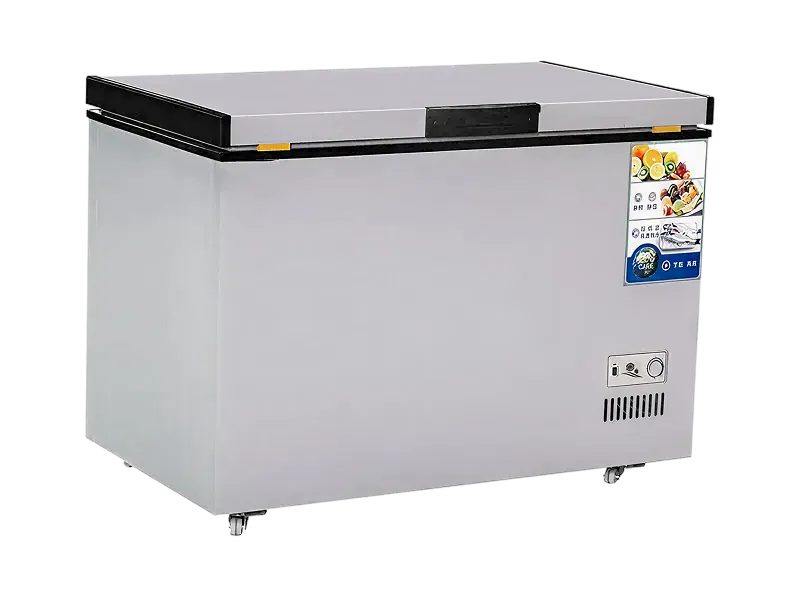
Published capacity figures can be misleading if the drawer geometry does not match your containers. Check the internal dimensions of each drawer, not just total cubic footage. A unit with three shallow drawers may hold less usable volume than one with two deeper drawers, depending on whether you store bottles, sheet pans, or produce bins.
Independent drawer temperature control allows one compartment to run near freezing for proteins while another stays several degrees warmer for produce or beverages. Look for digital controls with a clear display, and confirm the operating range suits your coldest requirement. Consistent cycling matters more than a wide advertised range.
The drawer glides carry the entire load and are the most common point of failure. Stainless steel telescoping slides with a smooth, full-extension action are preferable to partial-extension or plastic-track alternatives. Interior liners should be seamless or easily removable for cleaning, and gaskets should seal firmly without requiring force to close.
Dense foam insulation and a well-sealed drawer front determine how hard the compressor must work. A unit that holds temperature easily draws less power over its service life, which offsets a slightly higher purchase price. TZY Kitchenware emphasizes insulation quality and gasket fit in its drawer refrigeration range for precisely this reason.
These units need airflow. Built-in models draw air through a front grille, so the surrounding cabinetry must allow unobstructed intake and exhaust. Blocking ventilation forces the compressor to run longer and shortens its lifespan. Leave clearance at the rear and sides as specified, and avoid placing the unit beside ovens or other high-heat equipment.
On leveling: a horizontal cabinet that sits unevenly will cause drawers to drift or fail to close flush, breaking the door seal. Adjust the feet or leveling legs before loading the unit, and recheck them after it has been in service for a few weeks.
Routine maintenance is straightforward:
Neglecting the condenser is the single most common cause of premature cooling failure, and it is entirely avoidable.
Yes, provided the model is rated for built-in installation. Units designed only for freestanding use require open space around the cabinet and may overheat when enclosed.
Generally yes, because only the opened compartment is exposed to room air. The advantage grows with how frequently the unit is accessed.
Only if explicitly rated for outdoor installation. Outdoor-rated models use corrosion-resistant components and handle wider ambient temperature swings.
Two or three drawers suit most households and small kitchens. Four-drawer configurations make sense when distinct temperature zones or strict category separation are required.
A horizontal refrigerator with drawers is ultimately a decision about how you work, not just where you store. If your priority is fast, low-effort access to frequently used items — and you value organized, category-separated storage — the drawer configuration delivers measurable daily benefits. If sheer bulk volume is the goal, an upright cabinet still serves that need better. Measure your available footprint, confirm the drawer dimensions against your actual containers, and verify ventilation requirements before ordering. Sourcing from a supplier that documents insulation, glide hardware, and temperature performance, such as TZY Kitchenware, removes much of the guesswork from that evaluation.
Address: China · Shandong Province · Binzhou Detailed Address
Email: tzy@tzykitchenware.com
Phone: +8618754395173

Kitchen equipment
High-performance quality kitchen equipment supplier
Innovative and durable kitchen solutions for chefs and foodservice businesses


Call / Email
+8618754395173
tzy@tzykitchenware.com
Visit Our Office
China · Shandong Province · Binzhou Detailed Address
