Maximizing the number of pallets stored in a cold environment directly impacts operational efficiency and cost per unit. However, every additional pallet and rack level introduces a risk: restricted airflow can create temperature gradients, cause product dehydration, or even lead to microbial growth. The challenge is not merely to pack more pallets into the same footprint, but to do so while maintaining uniform air circulation across all storage zones. This article dissects the engineering principles behind high-density cold storage and presents actionable solutions—leveraging TZY Kitchenware's proven racking systems—that allow you to increase density without compromising your cold chain integrity.
Cold storage relies on continuous, even airflow to remove heat and maintain a stable set-point temperature. When pallets are arranged with minimal gaps, air can bypass certain lanes, creating dead zones. Standard 48-inch deep selective racking, for example, typically allows good airflow but uses only about 25-30% of the available floor space for pallet positions. High-density systems like drive-in or push-back racks can boost space utilization to 60-70%, but they inherently reduce the number of open air passages. The key is to design the rack geometry, pallet overhang, and ventilation slots so that air is forced to flow through, not around, the stored product.
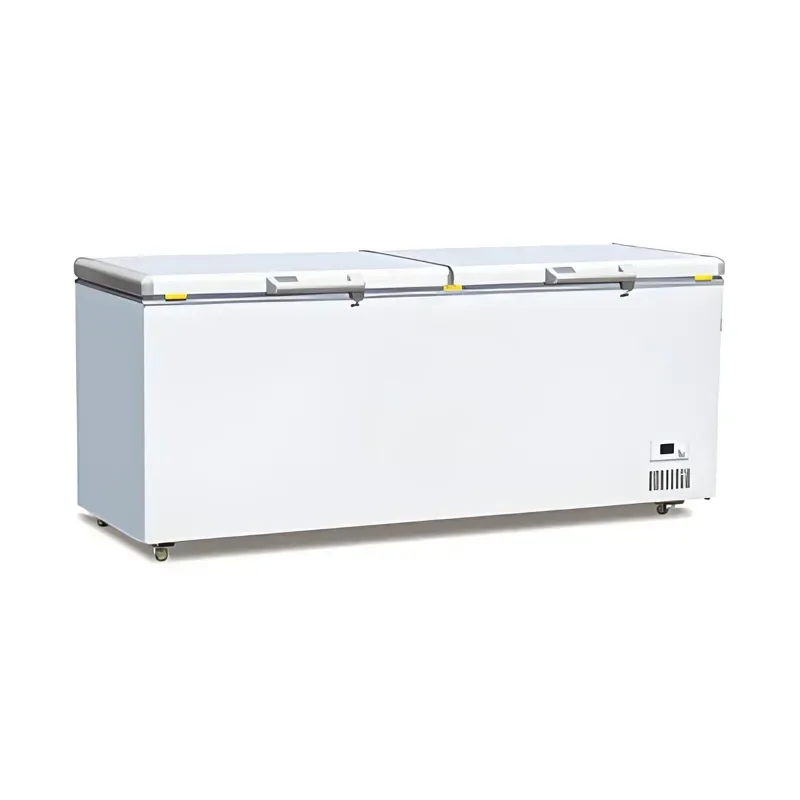
Innovative rack profiles now include perforated beams or wire decks that allow vertical airflow. TZY Kitchenware recommends using rack uprights with slotted openings and deep beam channels that create a natural air plenum. For drive-in systems, we specify vented back-to-back uprights that direct air from the refrigeration floor nozzles upward through the pallet rows. This design allows you to stack pallets three or four high while maintaining a temperature variance of less than 2°C across all levels.
In deep-lane systems, reducing the lane depth from 12 to 8 pallets can significantly improve air movement. For every additional pallet deep, the pressure drop increases exponentially. By limiting lane depth to 8 pallets and orienting pallets so that the longer side faces the airflow (turning block-stacked pallets 90 degrees), you can achieve 90% of theoretical density while retaining 85% of airflow effectiveness. TZY Kitchenware's layout software calculates optimal lane depth based on your specific product dimensions and refrigeration airflow CFM.
For very high density (up to 40% more than standard racks), ASRS systems with tilted shelves (e.g., 2-3 degrees) allow air to flow along the sloped surface, reducing stagnation. Combined with a low-velocity ceiling-mounted fan system that runs at 0.5 m/s, this configuration prevents moisture condensation on goods without increasing energy consumption. TZY Kitchenware partners with automation providers to integrate these tilt mechanisms into standard rack modules.
Below is a side-by-side evaluation of common cold storage rack types regarding their density-to-airflow balance. The ratings are based on industry test data and TZY Kitchenware's field installations.
With over 10 years of custom rack design for temperature-controlled environments, TZY Kitchenware approaches each project by first analyzing the thermal dynamics of your warehouse—air velocity, ceiling height, fan placement, and product respiration rate. We then model the rack layout using computational fluid dynamics (CFD) to simulate airflow behavior before installation. Our proprietary AirGuard™ beam design includes angled vane slats that channel air into pallet voids, effectively breaking up stagnant pockets. This allows you to increase pallet count by 15-25% compared to standard high-density racks while keeping temperature differentials below the industry standard of 2.5°C. Many of our clients report a 12% reduction in energy costs because the system works with, not against, the refrigeration unit.”
In most cold storages, you can achieve a 20-30% increase in pallet positions over selective racks by using drive-in or push-back systems with air-optimized components. However, the exact figure depends on ceiling height, product density, and the number of SKUs. TZY Kitchenware typically delivers a 18-25% net gain after airflow adjustments.
Yes. Adding perforated steel panels to the back of drive-in racks, installing floor-level air scoops, and replacing solid wire decks with expanded metal can improve circulation by 40% without reducing pallet count. We offer retrofit kits for most common rack brands.
For selective rack, a 4-foot aisle is sufficient if you install ceiling-mounted fans. For drive-in systems, a 3.5-foot central aisle combined with side air curtains works well. TZY Kitchenware provides free layout consultation to determine your specific needs.
Maximizing pallet density in cold storage is not about choosing between space or airflow—it is about designing a cohesive system where racks, air handling, and product pallets work in harmony. By integrating vented profiles, limiting lane depth, and leveraging intelligent rack geometry, you can achieve high density while preserving the uniform temperature that protects your inventory. TZY Kitchenware stands ready to engineer a tailored solution that delivers both metrics. Contact our team to schedule a thermal audit of your facility.
Maximizing Pallet Density in Cold Storage Without Compromising Airflow
2026-09-14Cold Storage Lifecycle: When to Repair vs. Replace Aging Coolers
2026-09-07Portable Cold Storage Units: Flexible Solutions for Seasonal Inventory Peaks
2026-08-317 Signs Your Cold Storage Is Wasting Energy and How to Fix Them
2026-08-24Address: China · Shandong Province · Binzhou Detailed Address
Email: tzy@tzykitchenware.com
Phone: +8618754395173

Kitchen equipment
High-performance quality kitchen equipment supplier
Innovative and durable kitchen solutions for chefs and foodservice businesses


Call / Email
+8618754395173
tzy@tzykitchenware.com
Visit Our Office
China · Shandong Province · Binzhou Detailed Address
