Choosing the correct cold storage size is one of the most critical decisions for any food service or hospitality business experiencing growth. An undersized unit forces frequent restocking and compromises product quality, while an oversized one wastes energy and capital. This guide provides a systematic approach to evaluating your storage requirements, factoring in menu complexity, supply chain patterns, and future expansion plans. Whether you operate a bustling restaurant, a catering company, or a growing kitchenware distributor like TZY Kitchenware's clients, the principles remain the same: align cold storage capacity with operational reality. By the end, you will have a clear framework to make a confident, data-driven choice.
Before comparing equipment, you must quantify the volume of perishable goods your business handles. Start by auditing your peak inventory levels over the past three months. Include raw ingredients, prepped items, and finished goods. For a growing business, add a 20–30% buffer to accommodate seasonal fluctuations and anticipated menu or service expansion. Document storage density: for example, how many sheet pans or gastro-norm containers fit per cubic foot. This baseline ensures your chosen cold storage size does not become a bottleneck within the first year.
Consider not just how much you store but how often inventory rotates. High-throughput kitchens with daily deliveries can operate with smaller refrigerators, while businesses receiving weekly bulk shipments need larger walk-ins. Use this formula: Required capacity = (Average daily usage × Days between deliveries) × Safety factor. The safety factor (typically 1.2 to 1.5) accounts for unexpected spikes in demand or supply delays. For example, if your restaurant uses 200 lbs of meat daily and receives deliveries every 5 days, you need at least 200 × 5 × 1.3 = 1,300 lbs of cold storage capacity for that commodity alone.
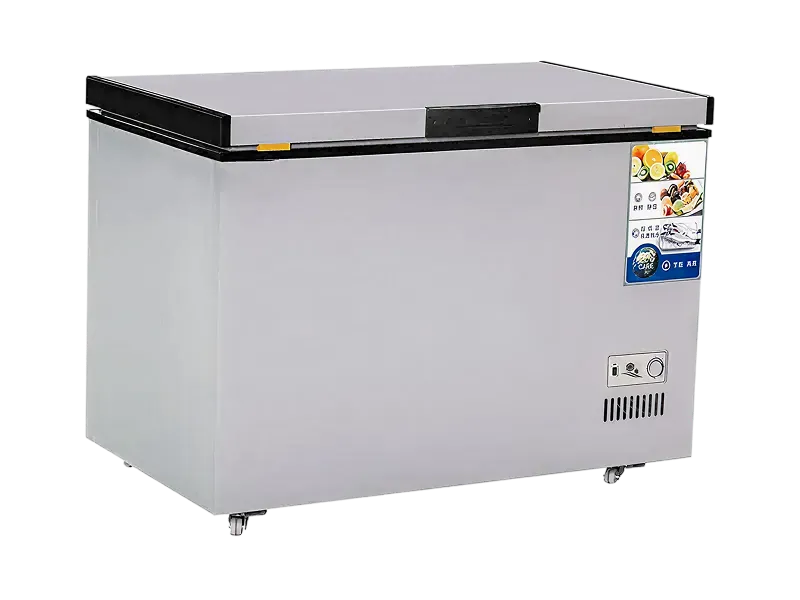
Beyond volume calculations, several operational and physical factors determine the optimal cold storage configuration. Ignoring these often leads to costly retrofits.
Commercial cold storage typically comes in standard dimensions: reach-in refrigerators (2–4 door), walk-in cooler kits (6×6, 6×8, 8×10 feet), and custom-built rooms. Each has trade-offs in cost, scalability, and flexibility.
| Type | Typical Capacity (cu ft) | Best For | Limitations |
|---|---|---|---|
| Reach-in (2-door) | 40–60 | Small cafés, backup storage | Limited volume, requires more cleaning |
| Walk-in 6×6 ft | 180–220 | Medium restaurants, catering kitchens | Moderate growth ceiling |
| Walk-in 8×10 ft | 400–500 | Large volume operations | Higher upfront cost, needs dedicated space |
| Custom modular | Variable | Scaling businesses with unique layouts | Longer lead time |
For businesses experiencing rapid growth, custom modular systems offer the best long-term value. TZY Kitchenware provides expandable cold storage panels that allow you to start with a smaller enclosure and add sections as your business grows, avoiding the need to replace the entire unit. This modular approach reduces capital expenditure while future-proofing your operation.
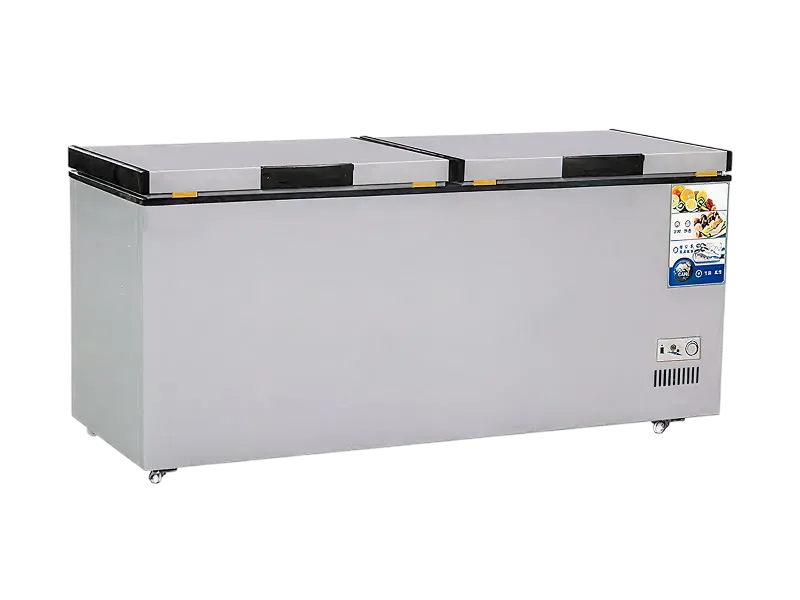
When you partner with TZY Kitchenware, you gain access to over a decade of industry expertise. Our cold storage solutions are designed with the specific needs of growing commercial kitchens in mind. Unlike generic equipment suppliers, TZY Kitchenware offers a comprehensive sizing consultation that includes on-site measurement, workflow analysis, and a 3D layout proposal—all at no extra charge. Our units feature:
Additionally, TZY Kitchenware backs every installation with a 5-year warranty on the compressor and a full year of priority technical support. Our clients have achieved up to 18% reduction in energy costs compared to legacy equipment, and our flexible financing options help growing businesses maintain cash flow while scaling infrastructure.
Selecting the right cold storage size is not a one-time decision but a strategic investment. Start with a thorough needs assessment using the formulas and factors above. Compare at least three configurations—one under, one at, and one slightly above your projected peak capacity. If you anticipate doubling your volume within three years, choose the larger option or a modular setup from TZY Kitchenware. Always prioritize units that balance initial cost with energy efficiency and scalability. Finally, do not hesitate to consult with experts. The upfront time spent on proper sizing pays dividends in reduced spoilage, lower utility bills, and seamless business growth.
How to Choose the Right Cold Storage Size for Your Growing Business
2026-06-0810 Ways Cold Storage Cuts Energy Costs Without Sacrificing Temperature
2026-06-01CO₂ vs Ammonia Refrigeration Systems for Large-Scale Cold Storage: A Practical Engineering Comparison
2026-05-28Energy-Efficient Cold Storage Insulation Panels: A Practical Guide to R-Value Comparison and Real Performance
2026-05-19Address: China · Shandong Province · Binzhou Detailed Address
Email: tzy@tzykitchenware.com
Phone: +8618754395173

Kitchen equipment
High-performance quality kitchen equipment supplier
Innovative and durable kitchen solutions for chefs and foodservice businesses


Call / Email
+8618754395173
tzy@tzykitchenware.com
Visit Our Office
China · Shandong Province · Binzhou Detailed Address
